
Here is what matters most before you act
- An inner barrier is usually a protective response, not a lack of talent.
- Emotional intelligence helps you separate the trigger, the story you tell yourself, and the action you take.
- Perfectionism, impostor feelings, conflict avoidance, rumination, and emotional suppression are common patterns.
- The fastest way through is usually smaller than people expect: name the pattern, lower the emotional charge, and take one visible next step.
- Managers can reduce these barriers by making expectations clearer and conversations safer.
What an inner barrier really is
When I talk about an inner barrier, I mean the emotional or mental pattern that interrupts action even when the skill is there. You may know what to do, have the experience to do it, and still stall because the task activates fear, shame, uncertainty, or a need to stay safe.
That is why an internal roadblock is so frustrating: it is not always a knowledge problem. In many cases it is a self-protection problem, and the brain prefers short-term comfort to long-term progress. You can see this in work patterns like delaying a pitch, avoiding feedback, or saying yes when you want to say no.
The useful question is not “What is wrong with me?” but “What is this reaction trying to protect?” That shift changes the problem from a vague failure into something you can observe. Once you can observe it, you can start working with it instead of against it, and that is where emotional intelligence starts to do useful work.
Why emotional intelligence helps you spot it sooner
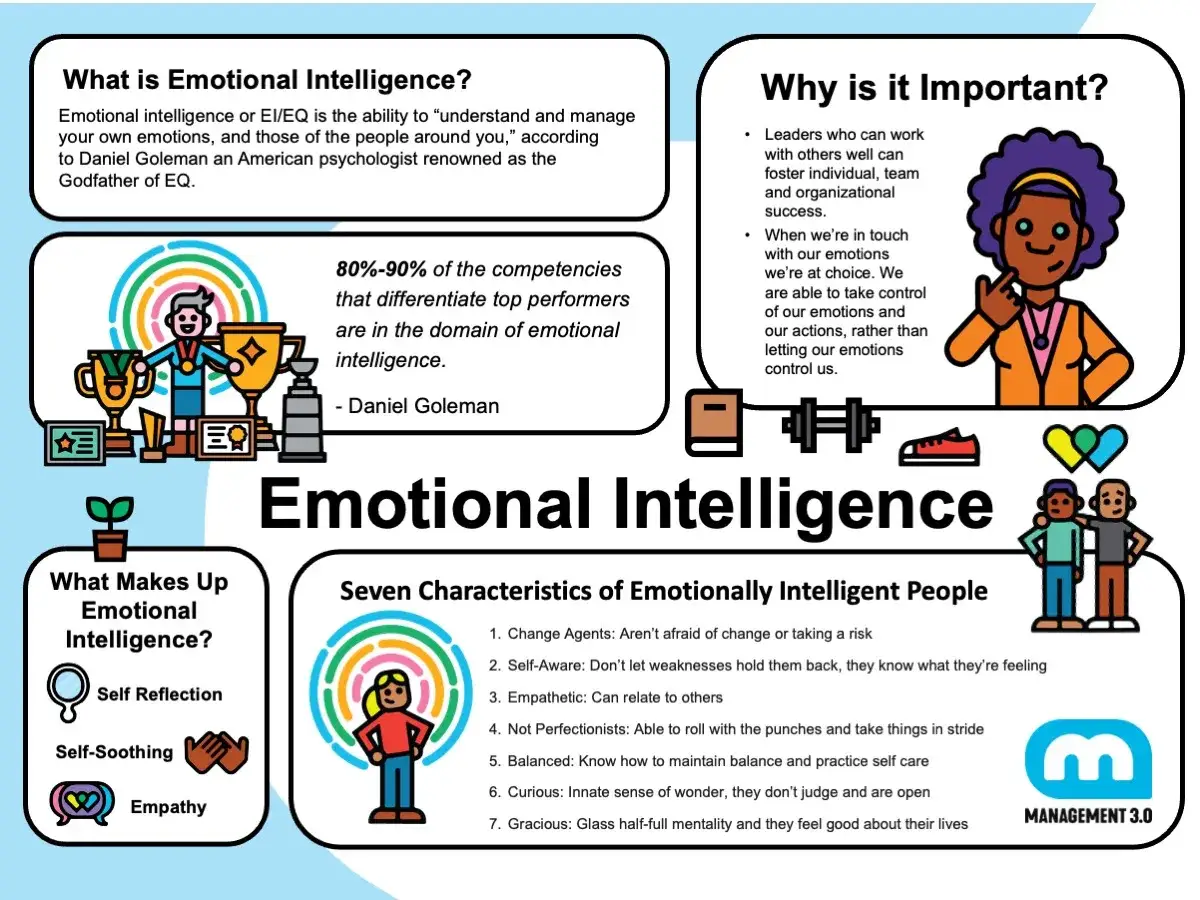
Emotional intelligence gives structure to something that otherwise feels messy. At its simplest, it helps you notice what you feel, understand why it is happening, and choose a response that is not just automatic. Most models break that into self-awareness, self-regulation, empathy, and relationship management, and all four matter when progress starts to wobble.I find self-awareness does the heavy lifting first. If you can recognise the moment your body tightens before a presentation, or the way your thoughts spiral after a blunt email, you are already closer to a useful response. Without that awareness, you usually end up treating the symptom, not the cause.
Self-regulation comes next. That does not mean suppressing emotion or pretending to be calm. It means creating enough pause to stop the feeling from choosing the behaviour for you. A ten-second pause before replying, a quick walk after a difficult meeting, or writing the response before sending it can make a real difference.
For leaders, emotional intelligence also includes reading the room. If a team member goes quiet after feedback, or if a meeting keeps circling the same issue, the barrier may be emotional rather than technical. I think this is one reason emotionally intelligent leadership tends to feel steadier under pressure: it treats emotion as information, not noise. Once you know that, the recurring patterns become easier to spot.
The patterns that most often block progress
Most people do not have just one barrier. They have a small set of recurring patterns that appear in different clothes. The table below shows the ones I see most often in careers and leadership roles.
| Pattern | How it shows up | What it is usually protecting | What helps |
|---|---|---|---|
| Perfectionism | Endless polishing, slow decisions, reluctance to ship work | Fear of criticism | Set a definition of “good enough” before you start |
| Impostor feelings | Discounting wins, waiting to be exposed, avoiding visible opportunities | Fear of not measuring up | Keep a short evidence log of results and feedback |
| Conflict avoidance | Agreeing too quickly, softening every opinion, delaying hard conversations | Fear of tension or rejection | Prepare one clear sentence that names the issue, not the person |
| Rumination | Replaying conversations, second-guessing decisions, losing focus | Fear of uncertainty | Write the next action, not the whole story |
| Emotional suppression | Looking composed while feeling stuck or resentful underneath | Fear of seeming weak | Put words to the feeling privately first, then with someone safe |
In UK workplaces, I often see emotional suppression mistaken for professionalism. That can work for a while, but it usually has a cost: slower decisions, flatter relationships, and more tension leaking out sideways. The pattern matters because each barrier needs a slightly different response, not one generic pep talk, and that is the bridge to actual change.
How to move through it without fake positivity
When people ask me how to get past a mental block, I usually say: start smaller, not louder. You do not need a motivational speech if the real issue is emotional overload. You need a process that reduces the charge and makes the next step obvious.- Name the pattern. Say it plainly: “I am avoiding this because I am afraid of being judged.”
- Separate fact from story. What do you actually know, and what are you assuming?
- Reduce the task. Turn “deliver the presentation” into “open the slides and fix the first three points.”
- Regulate first, decide second. A short walk, slower breathing, or a brief pause can prevent reactive choices.
- Review the result. After you act, note what changed. Progress becomes easier when your brain has evidence.
That last step is important because emotional patterns often survive on vague memory. If you record what happened, you stop treating every attempt as a fresh emotional crisis. Over time, that small habit builds confidence faster than forced optimism.
If the barrier shows up with persistent anxiety, low mood, panic, or burnout symptoms, I would stop calling it a simple productivity issue. At that point, extra support from a GP, therapist, or workplace wellbeing resource is a sensible next move, not an overreaction. Once you can name the pattern, the next job is to change your response.
What leaders can do to make the barrier smaller
Some inner barriers are personal, but many become much worse in poor systems. When expectations are vague, feedback is inconsistent, or mistakes are punished publicly, even confident people start to protect themselves. Leaders do not have to become therapists, but they do need to create conditions where people can think clearly.
Here are the changes that usually matter most:
- Make expectations visible. Unclear goals create avoidable anxiety.
- Separate performance from identity. Correct the work without making the person feel diminished.
- Reward candour. If people only get praised for agreeing, they will stop telling the truth.
- Use one-to-ones properly. Ask what feels harder than it should, not just what is overdue.
- Address conflict early. Small avoidance patterns become expensive when they harden into team culture.
Mind’s workplace training materials make a similar point: managers become more confident when they have practical tools for supporting wellbeing, and that confidence changes the quality of the conversation. I see the same thing in teams that normalise early check-ins. People spend less energy hiding, and more energy solving the real problem.
This is where emotional intelligence becomes a leadership skill rather than a personal preference. A manager who can stay curious instead of defensive reduces pressure on everyone around them, which in turn lowers the chance that a hidden barrier turns into a performance problem. That makes the final distinction worth making.
When the same barrier keeps returning
When an internal roadblock keeps coming back, I do not assume the answer is more discipline. I first ask whether the issue is capability, clarity, capacity, or confidence. That distinction saves time because each cause needs a different fix, and it tells you whether you need training, a better brief, a lighter workload, or emotional support.
- If it is capability, the answer is training or practice.
- If it is clarity, the answer is a better brief or a better conversation.
- If it is capacity, the answer is workload, pace, or prioritisation.
- If it is confidence, the answer is emotional work, support, or both.
If the same pattern survives all of that, treat it as useful data, not proof that you are incapable. The fastest progress usually comes from matching the fix to the real cause instead of trying to outwork a feeling. I have seen people move forward much faster once they stop blaming themselves for a problem that was never one-dimensional in the first place.