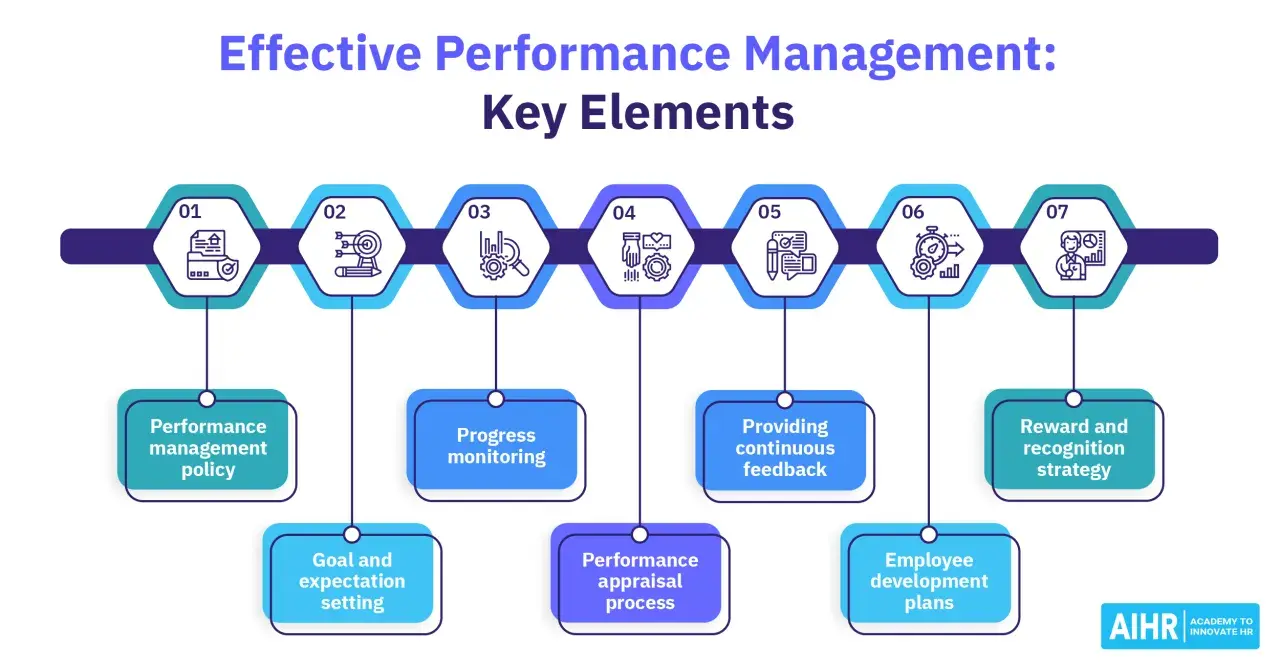
A performance management evaluation should answer a simple question: is this person delivering the right results in the right way, with the right support? I treat it as a working system for setting expectations, checking progress, and correcting course early, not as a once-a-year scorecard. Done properly, it gives managers clearer evidence and gives employees a fairer view of what good performance actually looks like.
What good reviews need to cover from the start
- Strong reviews look at results, behaviour, and development, not just output numbers.
- Annual-only appraisals are usually too slow for modern teams, especially in hybrid work.
- Regular check-ins make feedback easier to act on and reduce surprises.
- Good measures combine hard evidence with context, judgement, and collaboration.
- If performance slips, start by finding the cause before you move to formal action.
- In the UK, fairness, documentation, and reasonable adjustments matter more than polished templates.
What the review process is really for
I think the easiest way to get this right is to stop treating performance management as a single meeting. It is a wider system. The review itself is only one part of it, and the real value comes from the link between goals, feedback, support, and follow-through.
At its best, the process does three jobs at the same time: it assesses what has been delivered, it develops capability for the next stage, and it keeps accountability visible. That balance matters. If you only assess, people feel judged. If you only develop, standards can drift. If you only push accountability, the conversation becomes brittle and defensive.
Assessment
This is where you compare agreed expectations with actual performance. I usually want evidence here, not impressions. Deadlines met, work quality, stakeholder feedback, customer outcomes, and examples of ownership all matter more than general statements like "good attitude" or "needs to improve".
Development
A review should also answer the question "what will help this person do better next time?" That could mean coaching, training, clearer priorities, better tools, or more specific feedback. Development is not a soft extra. In strong teams, it is how performance improves without waiting for problems to become expensive.
Accountability
People need to know what standards they are being held to. That does not mean every role needs a rigid score. It does mean expectations should be specific enough that a manager and employee can agree whether the standard was met. If the standard is vague, the evaluation will be too.
ACAS frames appraisals as a chance to discuss what someone is doing well, where they need improvement, and whether they need more support, training, or career development. That is the right practical lens for most UK organisations, and it leads neatly into the question of timing.
The review rhythm that works better than the old annual appraisal
The strongest systems I see do not wait for one big annual event. They use a rhythm. That rhythm gives people enough structure to know where they stand, but enough flexibility to respond when priorities change. CIPD notes the shift clearly: more organisations are moving away from annual appraisals and toward ongoing, flexible reviews.
| Cadence | Best use | Weak point | My view |
|---|---|---|---|
| Monthly check-in | Blocking issues, coaching, priority resets | Can feel repetitive if nothing changes | Useful for fast-moving work and new starters |
| Quarterly review | Balanced feedback, goal progress, development | Needs disciplined notes and preparation | Best default for most knowledge teams |
| Annual appraisal | Pay, promotion, wider calibration | Too slow for course correction | Keep it, but do not rely on it alone |
| Ad hoc feedback | Praise, correction, urgent issues | Easy to forget if not recorded | Use it whenever something notable happens |
My default for most teams is simple: short monthly check-ins, a more formal quarterly review, and one broader annual conversation for pay, progression, and calibration. Calibration means aligning standards across managers so one team is not judged more harshly than another for the same level of work. Without it, ratings can drift quickly and trust drops even faster.
Once the rhythm is set, the next question is what you should actually measure inside it.
What to measure without turning it into admin theatre
The fastest way to ruin a review is to measure whatever is easiest to count. Volume is not the same as value. Busy is not the same as effective. I usually group performance evidence into three buckets: results, behaviour, and growth.
| What I measure | Good indicators | Common trap |
|---|---|---|
| Results | Targets hit, quality level, service speed, delivery reliability | Assuming more output always means better performance |
| Behaviour | Communication, ownership, teamwork, judgement | Confusing personal style with performance |
| Growth | Learning speed, adaptability, response to feedback | Expecting mastery before training has taken hold |
For many jobs, especially knowledge work, a tidy KPI is not enough. Some roles need outcome measures, some need behaviour-based standards, and some need a learning focus because the work changes too quickly for rigid targets. That is where SMART goals still help, but only if the goals are actually suitable. SMART means specific, measurable, achievable, relevant, and time-bound, yet in complex work I often prefer a blend of outcomes and learning goals rather than a stack of narrow numbers.
Put differently, I want a review to capture what was achieved, how it was achieved, and what the person can do next. That naturally leads to the conversation itself.
How to prepare, run, and close the conversation
I like to think of the review as a prepared conversation, not an interrogation. The quality of the discussion is usually decided before anyone walks into the room. Good preparation makes the feedback sharper, the tone calmer, and the outcome more useful.
Before the meeting
- Collect evidence from the full review period, not just the last few weeks.
- Ask the employee for a short self-review so you can compare perspectives.
- Bring a small set of examples, ideally two or three strengths and two or three gaps.
- Check whether the person has had enough resources, clarity, and support to succeed.
During the meeting
- Start with the agreed objectives, then compare them with real evidence.
- Be specific about behaviour, results, and impact.
- Ask what helped, what blocked progress, and what support would make the biggest difference.
- Leave space for the employee to respond, because one-way feedback rarely improves performance.
Read Also: End of Year Performance Review Examples - Write Better Appraisals
After the meeting
- Write down the main decisions while they are still fresh.
- Keep the action list short, ideally three priorities or fewer.
- Assign an owner and a date for each action.
- Book the next check-in immediately so the review has a visible follow-through.
If the conversation includes pay or promotion, I would separate that from development as much as possible. Mixing the two too tightly often makes people stop listening to the improvement part. Once the meeting format is healthy, the next risk is usually hidden in the feedback itself.
Common mistakes that quietly break trust
Most weak review systems fail in predictable ways. The problem is rarely the form. It is usually the judgement behind it.
- Recency bias - recent wins or failures dominate the whole review, even if the rest of the year tells a different story.
- Vague feedback - phrases like "be more proactive" sound neat but do not tell the person what to do differently on Monday morning.
- Personality creep - managers criticise style, confidence, or communication preference when the real issue is performance.
- Rating inflation - everyone gets marked too highly, which makes the scale meaningless and weakens credibility.
- Changing the goalposts - standards shift mid-cycle without explanation, so people feel judged against a moving target.
- Forced ranking - ranking people against each other can look tidy on paper, but it often distorts reality and damages collaboration.
The other mistake I see often is forgetting context. If someone was given poor tools, unclear priorities, or too many competing demands, the review should say so. That is not making excuses. It is being accurate. Accuracy matters because it shapes the next decision: support, correction, or escalation.
When performance drops, start with cause before consequences
ACAS is clear on this point: when performance slips, employers should first try to understand why. That distinction matters because not every performance issue is the same. Some are capability problems, some are conduct problems, and some are caused by workload, health, or a lack of proper support.
- Capability - the person may not yet have the skill, knowledge, or confidence to do the job well.
- Conduct - the issue may be behaviour, attitude, or rule-breaking rather than ability.
- Support gap - the role may be unclear, the tools may be poor, or the workload may be unrealistic.
- Health or disability factor - if this is relevant, reasonable adjustments may be needed before any formal route.
That is why I prefer a step-by-step response. First, define the gap with examples. Second, check whether the person understands the expectation. Third, look at support, training, and working conditions. Only then do I think about a formal improvement plan. For urgent skill gaps, a 2 to 4 week review point can work well. For broader development issues, 6 to 8 weeks is often more realistic.
If sickness is affecting performance, or if neurodivergence may be involved, move carefully and look at adjustments early. A formal process launched too quickly can create more problems than it solves, especially if the underlying barrier was never checked properly. Once that part is clear, the same logic needs to hold in hybrid and remote work.
A UK-friendly approach for hybrid and remote teams
Remote work exposes weak performance systems very quickly. If a manager relies on visibility, quick replies, or office presence, the process becomes unfair the moment people stop sharing the same space. I have seen this happen often enough to be blunt about it: presence is a weak signal, outcomes are a better one.
| Remote risk | Better practice |
|---|---|
| Judging busyness instead of output | Measure completed work, quality, deadlines, and customer impact |
| Uneven access to feedback | Schedule recurring 1:1s and keep a written record of key points |
| Loss of context across teams | Share priorities, dependencies, and blockers in one visible place |
| Accessibility gaps | Agree adjustments early rather than waiting for a formal issue |
I also think hybrid teams need a stricter standard for fairness, not a looser one. The same objectives should apply whether someone is in the office three days a week or working from home full-time. What can change is how you check progress: some people need more written follow-up, some need more live discussion, and some need more structured coaching. The standard should stay consistent even when the format changes.
The review system I would keep for most teams
If I were building this from scratch, I would keep it simple and workable.
- Set three to five clear objectives per person, not fifteen.
- Use monthly check-ins for blockers, priorities, and coaching.
- Run a quarterly review that looks at evidence, behaviour, and development.
- Keep one shared record of actions, support, and follow-up dates.
- Separate development conversations from pay discussions whenever possible.
- Escalate early if support is not working, instead of waiting for the problem to harden.
The best systems do not feel dramatic. They feel fair, calm, and specific. If you build the process around evidence, regular conversations, and real support, the review becomes less threatening and far more useful. That is usually where the real performance gain starts.